Outdoor Kitchen Gas, Power and Water Rough In
Run the gas, power and water lines before the island is clad. Here is the build order, the trades behind each line, and what to ask before you hire.
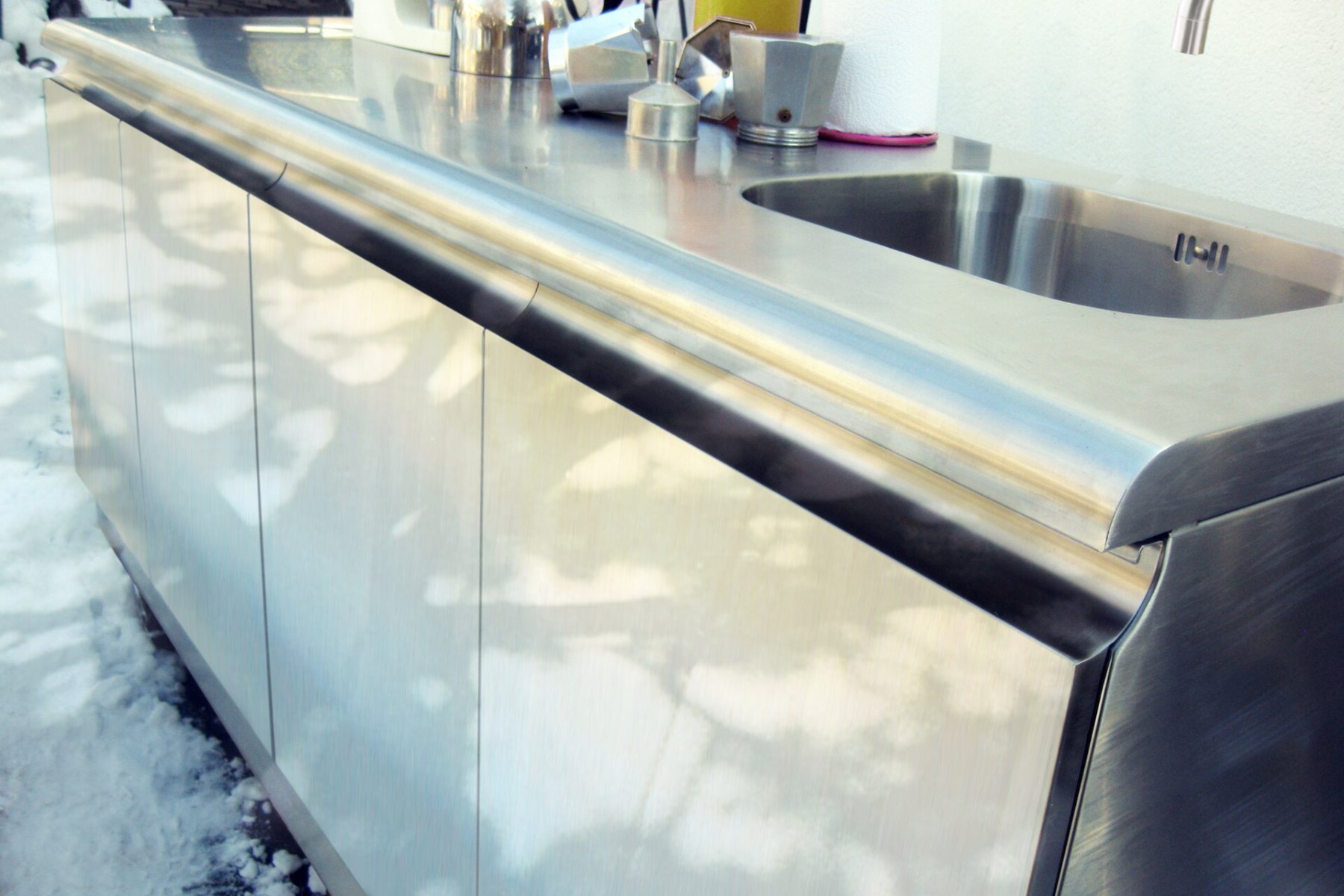
Rough in the gas, electric and water lines before the island frame goes up. Picture the day the mason's truck pulls away, the stone set and the island looking finished, and someone realizes there is no line for the sink. All Things Barbecue says adding a line after the stone cladding is on means demolition, which is a strange way to find out where the plumber was supposed to go. Everything photographed in an outdoor kitchen sits on a system nobody sees once the mason leaves, and three trades build it: the gas fitter, the electrician and the plumber.
A note on sources: the permit and cost examples below come from San Diego, because that is where the published figures exist. Los Angeles, Miami and New York each have their own building department, and local code governs. Ask yours which permits and inspections apply, and whether your building or lease allows outdoor gas at all.
Outdoor Kitchen Build Order
Plans differ by city, but the sequence barely changes:
- Decide exactly where each appliance takes its gas, power and water, then have licensed pros run those lines first (ATBBQ). Projul advises siting the kitchen on the side of the house nearest the gas meter and electrical panel to shorten the runs.
- Pull permits. Install-It-Direct says a fixed, permitted island needs a building permit, and San Diego jobs typically add trade permits for plumbing, gas and electrical.
- Do the underground work first: gas trench, lighting circuits and conduit, before paving. Install-It-Direct suggests spare conduits under the patio for future gas, data and low-voltage lines.
- Pour the slab. Projul recommends at least 4 inches for the patio and 6 inches under the island if it carries heavy counters and appliances.
- Frame the island and rough in the lines, then pass inspection before anything is covered.
- Clad the island. Projul says to put a weather-resistant barrier over cement board before stone or tile, and to vent the island with small top and bottom vents.
- Template the countertop last, after everything else is in.
- Winterize each fall (see below).
Gas Line Installation
Gas belongs to the plumber or gas fitter. ATBBQ says natural gas connections legally require a licensed one in nearly every jurisdiction, which is its own claim, so confirm the rule with your local building department. A code author at JLC goes further: only trained plumbers or mechanical contractors should do it, whatever the state's licensing rules say. Jaspector, summarizing the 2024 IRC, says outdoor gas is no DIY job and that a built-in grill on a stub-out needs a permit.
The plumber's first job is sizing. ATBBQ calls an undersized line the most expensive mistake, since line and regulator must handle every burner at once. Kalamazoo says the plumber sizes from total BTUs and run length, and Jaspector says demand on a multi-appliance island can exceed 150,000 BTU/hr.
Then comes the inspector. Jaspector's summary of the model code says underground pipe must be Schedule 40 black steel or polyethylene, and CSST is not permitted buried without approved protective conduit. It lists a minimum burial depth of 12 inches for metallic pipe, 18 under driveways, and a pressure test of at least 3 psi for 10 minutes, with buried runs tested before backfill. The model code is a starting point; your jurisdiction may amend it.
Install-It-Direct, a San Diego installer, estimates a gas trench and stub at about $1.8k to $5k+. That is one company's estimate for one market, not a quote for yours.
If a landscape contractor is digging, Jaspector says to verify gas-piping licensure and that a permit exists before anyone trenches.
Electrical Wiring for an Outdoor Kitchen
The electrician runs power, and the question is where the protection lives. ATBBQ recommends at least two to three GFCI outlets, one near prep space and one near the grill. Kalamazoo prefers GFI breakers in the home panel feeding the whole kitchen over individual outdoor outlets, subject to local code.
The JLC code author has never heard of an inspector requiring the IRC's two 20-amp small-appliance circuits on an outdoor kitchen, so expect local judgment rather than a fixed rule. Install-It-Direct puts circuits and devices at about $1.6k to $4.5k+ in San Diego, again its own estimate, and says a powered hood adds a mechanical permit. Its typical inspection order is gas pressure test, rough electrical, mechanical if there is a hood, then final.
An outdoor coffee bar follows the same logic. It needs power, water and a drain, so it is planned as one more station of the kitchen.
Water and Drainage for an Outdoor Sink
The plumber returns for water, and drainage is the harder half. ATBBQ says a sink needs both a supply and a drain planned, and the drain is harder to add later. JLC advises talking to the building department early, since supply and drain rules are local and depend on climate.
For year-round water, JLC says the sink should sit against the house's exterior wall with a hot-cold frost-protected hose bibb. Freeze-prone areas can use a seasonal supply with a stop and waste valve. A sink can drain into the home's drain-waste-vent system through a P-trap, though a P-trap can freeze and the building department may question the solution.
Winterizing an Outdoor Kitchen
Winter is a plumbing question you settle at rough-in. Where you live decides the plan: JLC's year-round option is a frost-protected hose bibb on the house wall, while a seasonal supply with a stop and waste valve suits freeze-prone areas. A P-trap drain can freeze too. Choose which before the pipes are buried.
For the yearly routine, Kalamazoo's winterization guide gives the sequence for sinks and plumbing:
- Close the supply valves.
- Open the drain valves.
- Blow out the lines with compressed air or CO2.
Ask your plumber to leave those valves where you can reach them without taking the island apart.
Questions to Ask Before You Hire
Put these to the builder, plumber and electrician before signing:
- Who holds the gas license, and who pulls the permit? Jaspector says to confirm both before trenching.
- How will you size the gas line for every appliance running at once?
- Where will each shutoff valve sit? The IRC, per JLC, says the stub cannot sit behind a door.
- Which inspections come before cladding, and will you wait for them?
- Where does the GFCI protection live, and how many outlets are planned?
- How does the sink drain, and what happens to it in a freeze?
- Which spare conduits go in while the trench is open?
- Who winterizes the plumbing, and how?
Related reading: this guide is one spoke of our pillar, Designing an Outdoor Room.
Countertop Templating
The last visitor is the countertop supplier, who by Kalamazoo's advice arrives only after everything but the counter is in. Tape and templates in hand, they step around the finished island, past stone that hides every pipe and wire. Somewhere behind a panel, each appliance has its own shutoff, just where the plumber set it, and the island is ready for its counter.
Highlights
Who installs the gas line for an outdoor kitchen?
A licensed plumber or gas fitter. Jaspector says outdoor gas is not a DIY job, and ATBBQ says licensing is legally required in nearly every jurisdiction, so check your local rule.
When should gas, power and water be run?
Before the island frame goes up and before cladding. ATBBQ says adding a line after stone is on means demolition.
Does an outdoor kitchen need a permit?
Usually. Jaspector's summary of the 2024 IRC says permanent outdoor gas appliances need a permit, and Install-It-Direct says a fixed island needs a building permit. Local rules govern, so ask your building department.
Sources
- Planning Electrical & Gas Hookups for an Outdoor Kitchen
- Code Requirements for Outdoor Kitchens
- IRC 2024 Outdoor Gas Appliances: Grills, Fire Pits, and Pool Heater Rules (Section G2445) | Jaspector
- San Diego Outdoor Kitchen Permits: Gas, Electrical & Venting | INSTALL-IT-DIRECT
- Installation Guide | Kalamazoo Outdoor Gourmet
- Winterization | Kalamazoo Outdoor Gourmet
- Outdoor Kitchen Construction Guide for Contractors