Electrician and Plumber Checks for Knob-and-Tube and Lead Pipes
What an electrician looks at in knob-and-tube wiring, what a plumber looks at in a lead service line, and the scratch and magnet test you can run on the main pipe first.
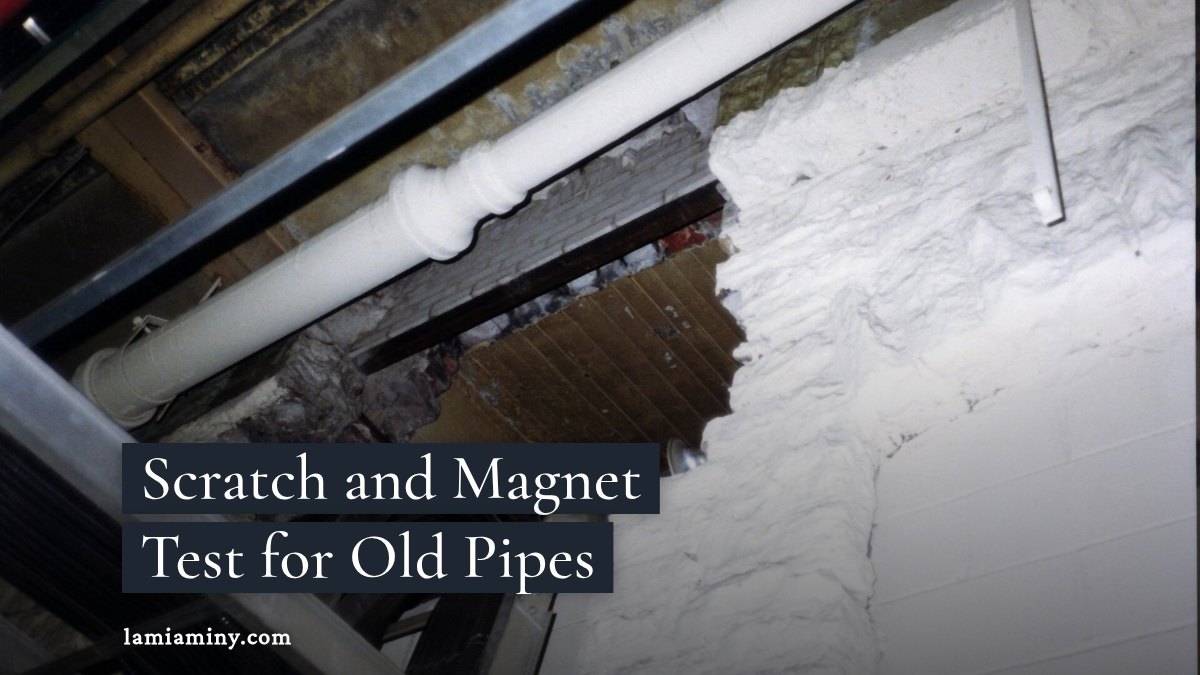
You can test the main water pipe yourself in a few minutes, before a plumber ever opens a wall. The EPA describes a scratch test and a magnet test that separate lead from galvanized iron. Start where water enters the house:
- Find the pipe that brings water in from the street. The EPA calls it the service line: the pipe connecting the water main to the building's plumbing.
- Scratch a small spot on the pipe. Lead is dull and soft, and it turns shiny silver when scratched.
- Hold a magnet to the spot. Lead is non-magnetic, so a magnet that sticks means the pipe is likely iron, which is the galvanized case.
- Tell the plumber what you found before the visit.
The tests are a first look. The EPA says utilities often lack records of the pipe material on the private-property part of the line, so your scratch may be the first check anyone has made.
Knob-and-Tube Wiring
Knob-and-tube is the old wiring most likely to surprise a buyer. InterNACHI, the home inspectors' association, dates its common use in North America to about 1880 through the 1940s and calls it obsolete. AHIT, a home inspection school, puts the standard era a little later, into the 1950s. The system runs insulated copper conductors through drilled framing in porcelain tubes, supported on nailed-down porcelain knobs. It has no ground wire, so it cannot serve three-pronged appliances.
Home inspector Michael Marlow, in AHIT's career guide, lists what to look for: 2-prong receptacles, 2-button light switches, fuse boxes, and empty holes in rafters a few inches apart. InterNACHI adds that inspectors often find connections wrapped in masking or Scotch tape instead of electrical tape.
What an Electrician Checks on Old Wiring
Marlow says wiring that may still be energized, or left behind in the walls, calls for an electrician's evaluation. InterNACHI agrees: only an expert can confirm the wiring was installed and modified correctly.
The electrician is looking at a few things. Is the wire brittle or cracked? InterNACHI says that wiring should be replaced. Is insulation packed around it? InterNACHI says that causes heat build-up and a fire hazard. Does it serve a kitchen, bathroom, laundry room or outdoor outlet? AHIT says those circuits must be grounded or have a GFCI receptacle or breaker.
Knob-and-Tube Rewiring Cost and Insurance
No code requires complete removal of knob-and-tube, according to InterNACHI, and rules differ by jurisdiction. Insurance may push the decision anyway. InterNACHI and AHIT both say insurers often refuse these houses or charge higher premiums, though InterNACHI notes exceptions when an electrical contractor deems the system safe.
Rewiring a house takes weeks and costs thousands of dollars, InterNACHI says. Its advice to buyers is to get an estimate for the work and use it to negotiate a lower price.
Lead Service Line and Galvanized Pipe
The EPA says lead service lines went in mainly from the late 1800s through the 1940s. It names three common sources of lead in drinking water: old service lines, faucets and fixtures that contain lead, and leaded solder joints. The National League of Cities adds that drinking tap water from corroded lead lines is one common way people ingest lead.
A plumber checks the line material, the fixtures and the solder joints. Telling lead from galvanized iron comes first, and your magnet already started that job: iron sticks, lead does not. The EPA describes sequential sampling, which takes multiple water samples from one household faucet to find potential lead sources. It also lists digging up a buried line to look at it among the most expensive ways to identify it.
Lead Service Line Replacement Rules
The National League of Cities says the EPA's Lead and Copper Rule Improvements, issued October 8, 2024, require water systems to inventory their lead service lines and plan to replace all of them within 10 years. It estimates 9.2 million lead service lines nationwide. Ask the water utility what it has on record for the address, then compare that with your own scratch test.
Questions for an Electrician or Plumber
For the electrician: Is any knob-and-tube still live, or only left in the walls? Is insulation covering it? Are the kitchen, bath and laundry circuits grounded or on GFCI protection? Will my insurer accept your sign-off?
For the plumber: What is the service line made of, and on which side of the property line? Are there lead fixtures or solder joints? Would sequential sampling help here?
For both: Can I have a written estimate to use in negotiation?
The EPA's test comes down to one change you can see with a key and a pipe. Old lead looks dull and soft, and under the scratch it turns shiny silver.
Highlights
How do I tell lead pipe from galvanized pipe?
Scratch the pipe: lead is dull and soft and turns shiny silver. Then hold a magnet to it: if it sticks, the pipe is likely iron.
Who checks knob-and-tube wiring?
A qualified electrician. InterNACHI says only an expert can confirm it was installed and modified correctly.
Can old wiring affect home insurance?
Yes. InterNACHI and AHIT both say many insurers refuse knob-and-tube houses or charge more, with some exceptions when an electrical contractor deems it safe.