Who Runs the Sewer Line Camera Before You Buy an Older House
A camera on a cable crawls the pipe nobody toasts at a housewarming. Here is what it shows by pipe material, whether the inspector or the plumber should run it, and what to do next.
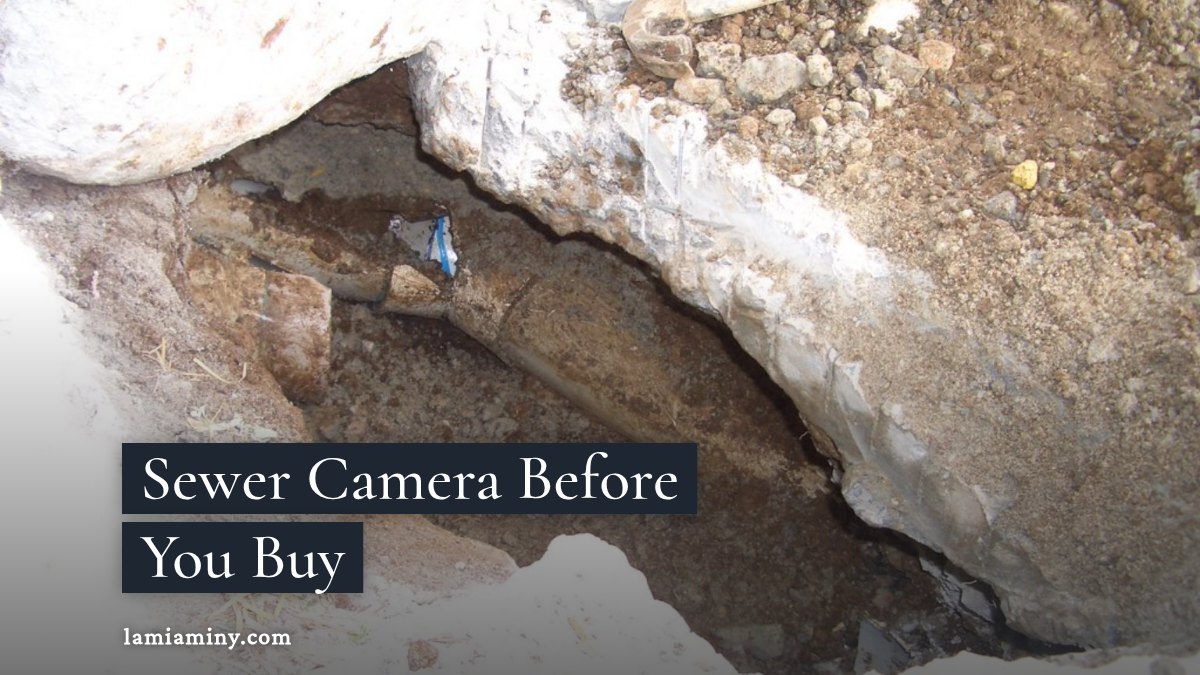
Nobody toasts the sewer line at a housewarming, which is why it needs its own appointment before closing. Picture the scene: a small camera on a cable goes into the cleanout in the yard and crawls toward the street, and for the first time anyone sees the pipe the whole house drains into. HomeGauge notes that a traditional inspection documents only what can be seen, so the scope is what reveals underground problems and can support price negotiation. To order one:
- Ask your home inspector early whether they offer a scope. InterNACHI's standards don't require it, but many inspectors sell it as an add-on.
- Book it with the inspection. HomeGauge says most inspectors discount it when it is added to a full inspection.
- Ask where the camera starts and stops. HouseMaster says some technicians scope only from the cleanout to the street, a less comprehensive view.
- Ask for the whole recording. InterNACHI's standard has the inspector record the full video and hand it over as a link or a physical copy.
- Watch it yourself. If something looks wrong, InterNACHI says the inspector should advise you to consult a professional, and for a sewer line that means a plumber.
- Get the plumber's repair quote before closing and bring it to the negotiation.
Where the Sewer Camera Goes
InterNACHI defines the scope as a video inspection of the lateral line, running from the house at or near the foundation out to the city or HOA tap or the septic tank. HouseMaster says it generally takes about 30 minutes. Stretches of drain inside the house or under the floor are not part of the standard, so ask about those if the house has them.
What the Camera Finds in Clay, Orangeburg and Cast Iron
HouseMaster recommends a scope when buying, especially for homes built before 1970. What turns up depends on what the pipe is made of:
- Clay: HomeGauge said in 2021 that older lines are sometimes clay or tar paper, which have limited life spans and eventually collapse, backing sewage into the yard or house. RISMedia added that older homes tend to have clay or concrete lines that crack.
- Orangeburg: the bituminous fiber pipe HouseMaster flags in homes of that era. InterNACHI's scope standard doesn't require the inspector to identify it, so ask what material is on screen.
- Cast iron: HouseMaster says old cast iron drain lines are prone to root damage, rust and backups.
- Roots: RISMedia said roots push through small cracks and can block the line.
- Belly: plumbers' word for a sag where the line sinks into the ground, per RISMedia. HouseMaster lists bellies among what the technician checks.
- Collapse: the InterNACHI standard has the inspector report blockages and crushed, broken, separated or collapsed pipe, plus egg-shaped lines.
Home Inspector or Plumber for a Sewer Scope
The inspector is the easy first call. InterNACHI says most jurisdictions don't require a scope inspector to be a licensed plumber, since the work is visual and nothing gets repaired, and that it is easy to add when the inspector is already at the house. HouseMaster puts the price at around $200 alongside a home inspection, or over $400 done independently.
The plumber is the second call. The inspector sees and reports, and the standard doesn't require a repair estimate. The plumber reads the footage and quotes the fix, which can include a liner inserted into the old drain, though HouseMaster says data on how those hold up is limited. Either way, you are choosing someone to put their name on what they saw underground, so ask to see footage from their other jobs.
What to Do With the Findings
A scope has limits: InterNACHI's standard calls it not technically exhaustive, and it won't catch concealed or latent defects. For what it does find, HouseMaster advises following the inspector's recommendations, since each case is unique, and puts sewer drain replacement at $3,000 to $30,000 depending on location, size and replacement type. That spread is the reason to have a plumber's quote in hand before you close.
What Sewer Line Replacement Looks Like
If the quote says replace, HomeGauge describes the job in plain terms: the city has to help disconnect the line from the main, and an excavator has to open the ground. Any landscaping in the way is lost, and the yard you toured becomes a trench until the new pipe is in.
Highlights
Who should run a sewer scope before I buy?
Usually your home inspector, as an add-on, because a visual scope generally doesn't need a plumber's license in most jurisdictions. Call a plumber for the repair quote if defects show up.
How much does a sewer scope cost?
HouseMaster puts it at around $200 when added to a home inspection, and over $400 when booked on its own.
What does it cost to fix a bad sewer line?
HouseMaster gives a range of $3,000 to $30,000, depending on location, pipe size and the type of replacement.
Sources
- Sewer Scope Inspections for Home Inspectors - InterNACHI®
- InterNACHI's Sewer Scope Inspection Standards of Practice
- Sewer Scope Inspection Guide | HouseMaster Serving Denver Central
- Understanding Sewer Scope Inspections | HomeGauge
- What You Should Know About Sewer Scope Inspections — RISMedia
- How Home Inspectors Can Offer Sewer Scope Services - InterNACHI®