Stone Wall Footing Depth and Width
Stonemason Joseph Kenlan says many repairs his crew has done were avoidable. What a stone wall footing is, how deep and wide it goes, and what to ask a mason before hiring.
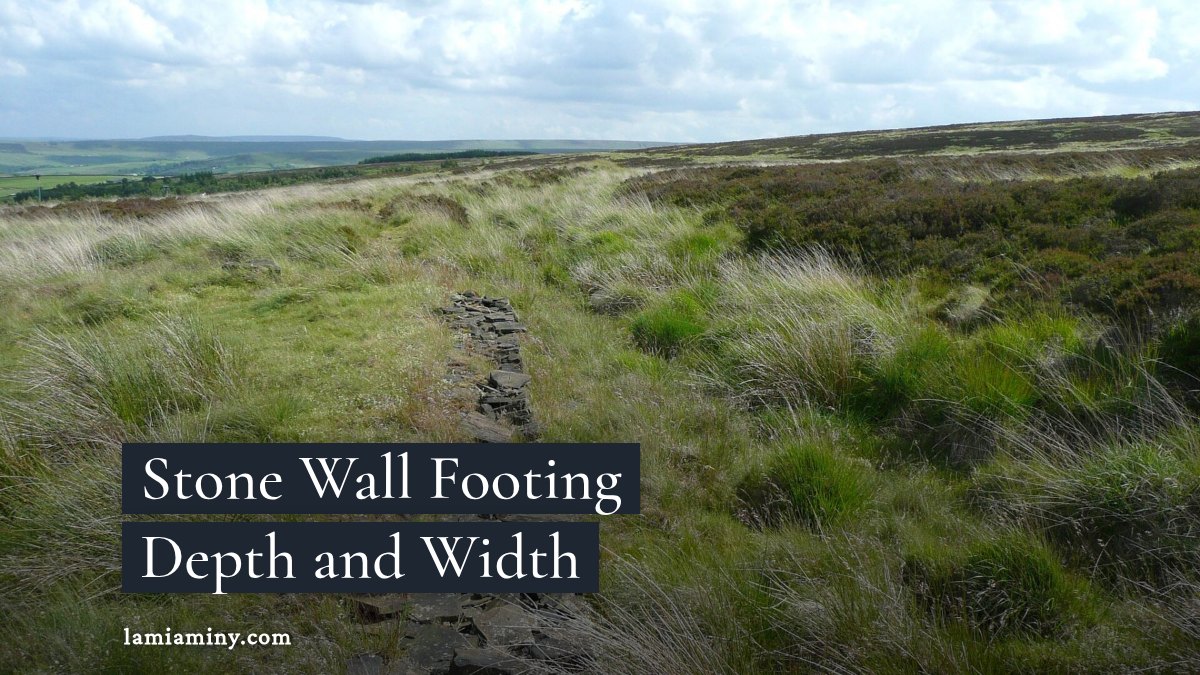
Stonemason Joseph Kenlan has spent part of his career fixing walls that did not need fixing. He told Fine Homebuilding that many of the repairs his crew has done would have been unnecessary if a footing had been installed in the first place. That is the cost of skipping it: a wall that heaves, shifts and gets rebuilt. The usable instruction is short. Before you call a mason, call your building department, because local codes usually set the footing's depth and dimensions.
Why a Stone Wall Needs a Footing
Kenlan says a footing does two jobs: it spreads the wall's weight, and it protects the wall against frost heave. Water in the ground freezes and pushes up. A wall sitting on loose or shallow soil takes that push course by course.
How Deep and How Wide a Footing Goes
Fine Homebuilding's guidance on stone walls, which quotes Kenlan, sets the order a crew follows. The depth and width below are its rule; your local code has the final word.
- Dig to solid ground and compact it.
- Set the footing below the frost line.
- Make the footing at least twice as wide as the wall.
- Run batter boards and string lines for foundations and low walls. Taller walls get plumbed, braced story poles. Either one keeps the courses straight.
Footing for a Dry Laid Retaining Wall
A dry-laid wall has no mortar, so air and moisture pass through it. That is why it is mostly used for retaining walls, where water has to get out. Fine Homebuilding says its footing can be broad, flat base stones set over 1 to 2 inches of crushed stone, still below the frost line, so the base drains. Dry-stack with hidden mortar is the choice for house walls and chimneys.
Who Builds a Backyard Stone Wall
A landscape architect writing in Masonry magazine says professional masons typically build the vision a designer and homeowner create for an outdoor living area. For a wall that carries weight, that means the footing is the mason's work, not an afterthought. This Old House, writing about fire pits, says stone or brick set in mortar is best left to a mason. The sources reviewed here give no prices for walls, so ask for a written quote.
Questions to Ask a Mason Before Hiring
Ask these, in this order:
- How deep is the footing, and does it meet local code for frost depth?
- How wide will it be compared with the wall?
- Is the base compacted solid earth, or crushed stone for a dry-laid wall?
- How will water drain through or away from the wall?
How a Sound Stone Sounds
Once the footing is in, Fine Homebuilding's advice for laying stone comes down to the ear and the grain. Lay each stone with its rift, the easiest splitting direction, horizontal when possible, so the strongest part carries the load and the stone does not delaminate. Then strike it with a hammer. A sound stone rings. A cracked one gives a dull thud.
Highlights
How deep should a stone wall footing be?
Below the frost line, on solid, compacted earth. Local codes usually set the exact depth and dimensions.
How wide should a stone wall footing be?
At least twice as wide as the wall, according to Fine Homebuilding.
What goes under a dry-laid retaining wall?
Fine Homebuilding says broad flat base stones over 1 to 2 inches of crushed stone, below the frost line, so the base drains.