Wet Yard Drainage
Where rain goes around a house, how grading, swales, French drains and dry wells redirect it, and which trade to call for each job.
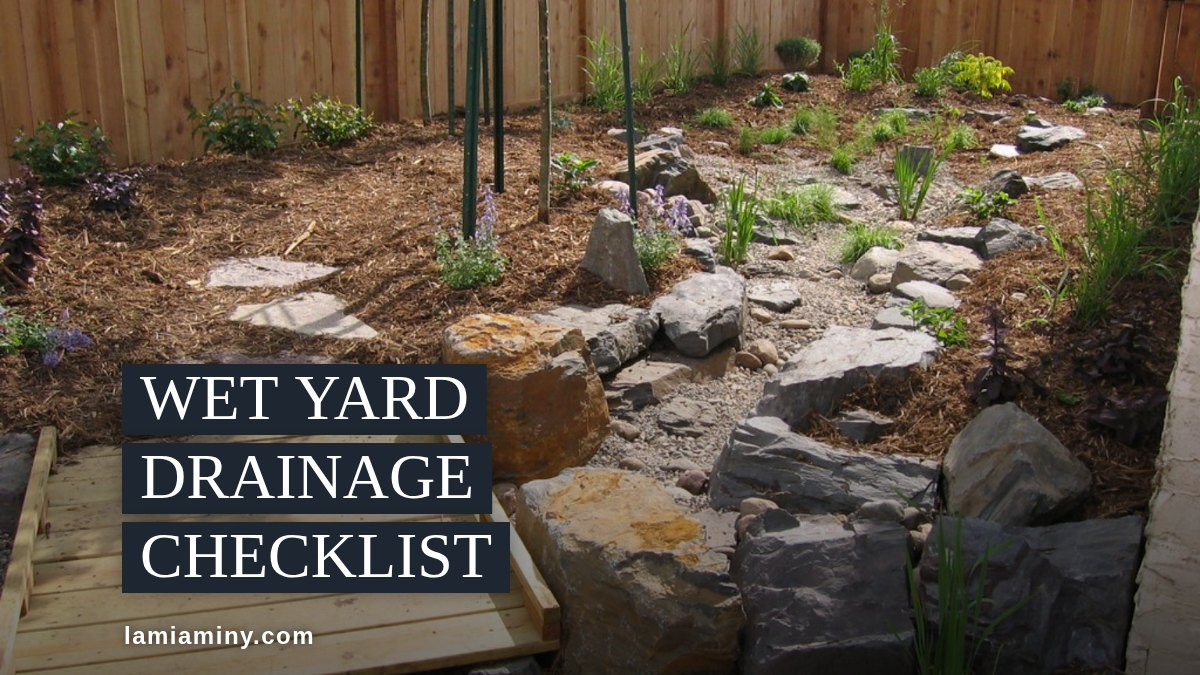
A house with a 1,600 sq. ft. footprint sheds roughly 1,000 gallons of water with every inch of rain, BuildingAdvisor estimates. That water lands somewhere, and in a wet yard it is somewhere you did not choose. Four checks, made during a storm and again after it, will tell you which crew to call.
- Stand at the foundation and look outward. The ground should fall 6 inches over the first 10 feet. That is the California Residential Code rule, and it is the figure that governs here. Flat ground, or ground tilting toward the wall, is the first thing a grading crew fixes.
- Follow each downspout to its end. Home inspector Reuben Saltzman advised extending every one at least 6 feet from the house. Make sure none connects to a footing drain, which can overload it.
- Walk the edges and note pooling at the foundation, soggy spots, erosion along walkways and any musty smell indoors.
- Return when the rain stops. Water still sitting in a low channel 48 to 72 hours later is not draining the way a swale should.
Write down what you saw and where. A crew can quote from that list.
Yard Grading Slope Rules
Grading is the oldest fix: reshape the ground so water runs off the walls. One slope rule runs through this piece, 6 inches of fall in the first 10 feet, and California's code writes it in. Where a wall or other barrier makes that impossible, the code calls for drains or swales, and paved surfaces within 10 feet must slope at least 2 percent away from the house.
The fill matters as much as the slope. Family Handyman advises a silt and clay mixture over sandy soil, because it compacts enough to resist water soaking straight through.
Swale vs French Drain
The two get confused, and the wrong choice wastes the money. A swale handles surface water: a shallow, gently sloped channel that sends runoff to a safe outlet or lets it soak in. A French drain handles water below the surface: a perforated pipe in a gravel trench wrapped in filter fabric, laid with at least 1% downward grade to a discharge point.
A curtain drain is a close relative, a gravel-filled trench typically 2 to 4 feet deep that intercepts water before it reaches the foundation.
The two also work as a pair. A French drain can empty through a pop-up emitter into a swale that carries the flow to a storm sewer or other safe outlet. Saltzman describes the same ladder: a swale can guide leftover water away, and bigger problems may need a French drain or a dry well.
Dry Wells and Outlets
Landscaper Benjamin Hanley separates the two by what they do with water. A French drain moves groundwater away; a dry well collects stormwater and lets it seep slowly into the water table. Clay soil usually favors the French drain, he said, because a dry well can struggle to release water into clay and may suit sandy or loamy ground. A French drain can also carry heavy surface runoff to a dry well, and he advised consulting a professional about site conditions first.
A typical dry well is about 4 feet across and 4 feet deep, lined with heavy landscape fabric. Keep it at least 10 feet from the foundation and 75 feet from any well or septic system. French drain emitters should be checked every spring and the system flushed every 3 to 5 years.
Who to Hire for Yard Grading
Size sets the trade. One or two people with hand tools can handle a small grading job. A large one belongs to professional landscapers with earth-moving equipment. Excavating contractor is the call that Ted Carter, a contributor to This Old House, makes for larger properties, since they bring the heavy equipment and the skill to regrade. Complex drainage, a steeply sloped yard or a severe water problem points to a professional too.
Two notes before the machines arrive: moving more than 50 cubic yards of soil may require a grading permit, and the utility-location service should be called before anyone digs.
What Yard Drainage Costs
The sources used here do not price work in Los Angeles, Miami or New York, so get local quotes and ask each contractor what they assume about machinery and soil. For comparison, Homes and Gardens reported that a French drain is usually cheaper to install than a dry well, and that a dry well kit alone runs just under $500 before any digging. Ware Landscaping's per-foot ranges put a grass swale well below a standard exterior French drain, though its page does not name a currency, so treat them as a ranking, not a price.
When it works, the storm shows it. Water runs off the roof, leaves the extended downspout well clear of the wall, crosses the yard in its shallow channel and slips out at the far end, while the ground along the foundation stays dark only where the gutters dripped.
Highlights
How much should the ground slope away from a house?
The California Residential Code requires the ground to fall "at least 6 inches within the first 10 feet from the foundation". This Old House recommends about the same slope.
What is the difference between a swale and a French drain?
A swale is a shallow channel that handles surface water. A French drain is a perforated pipe in a gravel trench that handles subsurface water.
Who do I hire to regrade a yard?
For large jobs, a professional landscaper with earth-moving equipment or an excavating contractor. Small jobs may be done with hand tools by one or two people.
Sources
- How to Grade a Yard for Proper Drainage
- How To Grade Around a Foundation - This Old House
- How must the site be graded and surface drainage directed
- Swales vs. French Drains: Which Do You Need? (2026) | Ware Landscaping
- French drains vs dry wells: which is best for your backyard? | Homes and Gardens
- Managing Yard Drainage: From French Drains to Dry Wells | Rainplan
- Site Drainage Strategies For Dry Basements