Kitchen Sink Plumbing Renovation
The plumber's decisions go into the wall long before the countertop is cut. Here is what to settle on the sink, faucet and appliances before rough-in.
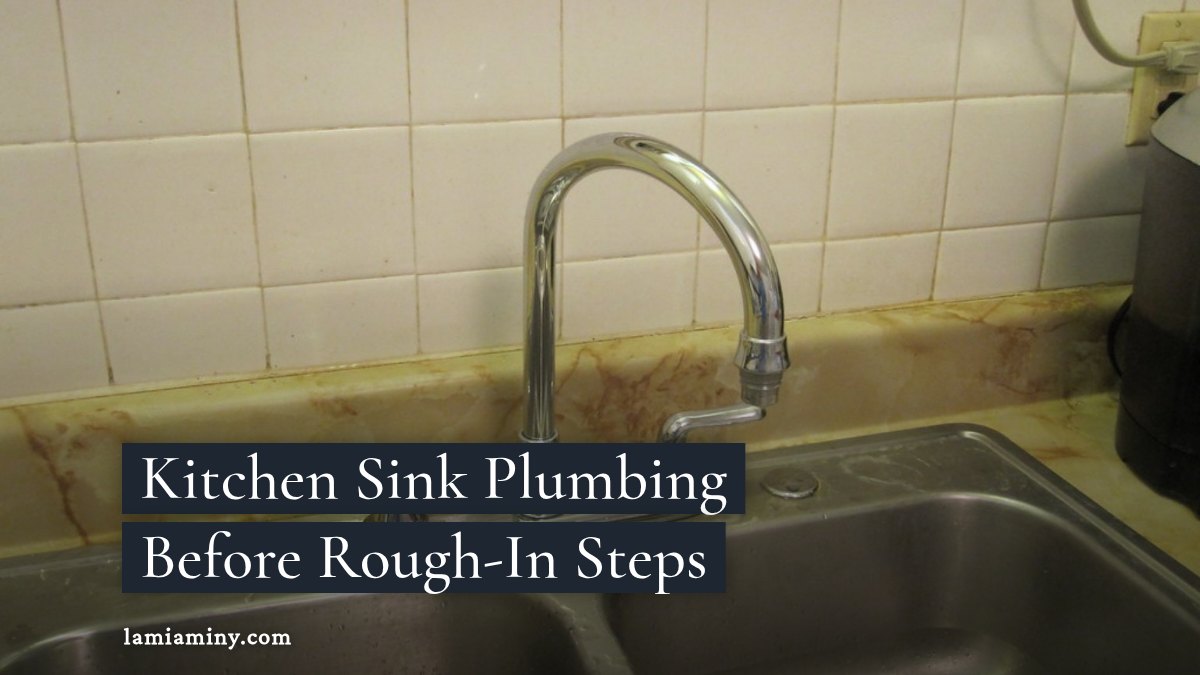
Nobody photographs the inside of a kitchen wall. The stone sample gets the long weekend and the group chat, while the plumber's choices get made earlier, with a flashlight, in a space that will be closed up and forgotten. Yet Block Renovation says the sink location, drain routing and appliance hookups are effectively locked once cabinets are ordered. So before rough-in, when the plumber runs pipe behind the finished wall, settle the sink position, the sink type and the appliances, in this order:
- Decide whether the sink stays put or moves. That one answer sets the size of the whole plumbing job.
- Choose the sink, then confirm the base cabinet will take it before anything is ordered.
- List everything that passes through the countertop (faucet, soap dispenser, filter tap, air gap) and dry-fit it all before fabrication, because an extra hole cannot be undone in stone.
- Place the dishwasher close to the sink drain, within 6 feet. Farther away it needs its own drain connection, and that adds cost.
- If the sink is going on an island, ask the plumber early how much cabinet space the vent will take.
- Put the plumber and the cabinet installer in the same conversation about the final layout, since Block says conflicts often arise at that handoff.
Same Spot Sink Swaps
If the new sink and faucet land where the old ones were, most of the work stays where it is. The plumber reconnects to the drain and supply lines already in the wall.
The faucet has a rule of its own: Hunker says the spout must sit at least 3 inches above the sink's flood rim, and a sprayer needs backflow prevention. Fixr puts kitchen faucet installation at $500 to $2,500, with the plumbing work alone at $300 to $1,500.
Moving a Kitchen Sink Drain Vent and Supply
Moving a sink a short distance usually means extending the drain and vent and using longer faucet supplies, according to Hunker. The main concern is pitch: the drain needs enough fall to carry water away, and Block notes that a long horizontal run to the stack may require opening the floor.
On a slab foundation, Hunker calls the move very difficult, because pitching the drain means cutting through the slab. Block says moving a sink adds $500 to $2,000 or more, rising with distance from the existing drain and vent.
Island Sink Venting
An island has no wall to run a vent through, which is why Hunker calls venting the main problem with an island sink. The options are an island vent loop or an air admittance valve, and local code rules vary by city. Block says an island sink needs a loop vent or island vent under code, which means more pipe and labor than a sink on a wall.
JLC advised working with the plumber early to learn how much cabinet space an island vent takes, since the plumber may need an inspector's approval first.
Dishwasher Air Gap Requirements
Fresh Water Systems says many plumbing codes require dishwashers to drain through an air gap, with a high loop as the common alternative where one is not required. In a loop, the drain hose rises so its top sits above the sink's flood level. If an air gap is on the list, it needs its own hole in the counter, so add it to the dry-fit.
The garbage disposal has its own rule. It must drain through the trap, and Block says bypassing the trap violates code and fails inspection.
Shutoffs and Supply Connectors
With the walls open, it is the cheap moment to swap the angle stops. Block recommends quarter-turn ball valves over multi-turn stops, and braided stainless supply connectors rather than plastic or rubber, which it calls a leading source of under-sink water damage.
Two checks for older houses: copper joined directly to galvanized steel corrodes, so that joint needs a dielectric union, and the P-trap and cleanouts should stay reachable once the cabinets go in. Gas for a stove is a separate matter. Hunker says to leave it to professionals because a leak can be fatal.
Kitchen Plumbing Costs
Fixr puts kitchen remodel plumbing at $4,000 to $7,000, averaging $5,500. A partial remodel with one drop-in sink, faucet and dishwasher with PEX averages $1,600, while an extensive full remodel can top $10,000. Fixr adds that the materials and trap types allowed vary by state, so the plumber can explain what meets local code.
What the Inspector Looks For
On an island, the inspection is where the plan gets read back to you. JLC says inspectors look for a bow vent tie-in higher than the sink overflow height and a relief drain through the floor. Both have to be built into the cabinet by the plumber before the finished kitchen exists, so by the time anyone admires the countertop, the inspector has already checked the one part that is no longer visible.
Highlights
What does a plumber do when a kitchen sink moves?
They extend the drain and vent and run longer supply lines, keeping the drain pitched so water flows away. Block says the move adds $500 to $2,000 or more, depending on distance from the existing drain and vent.
What should I decide before rough-in?
Settle the sink position, the sink and its base cabinet, the countertop fittings and the dishwasher location. Block says these are effectively locked once cabinets are ordered.
Does an island sink need a vent?
Yes, it needs a loop vent or island vent under code, according to Block. Hunker adds that an air admittance valve is another option where local code allows it.
Sources
- Kitchen Plumbing Remodel Tips: 50+ from Planning to Inspection
- Moving Kitchen Plumbing: What You Should Know
- Venting an Island Sink - Journal of Light Construction
- Kitchen Sink Plumbing Code: What You Need To Know
- Cost to Plumb a Kitchen | Plumbing Cost for Kitchen Remodel | Fixr.com
- Dishwasher Air Gap: What It Is, Do You Need One & How to Install – Fresh Water Systems