Excavation Crew Site Prep Before the Foundation
From the surveyor's stakes to a ready foundation pad: what the excavation crew does, in order, and the three things an owner should settle before any dirt moves.
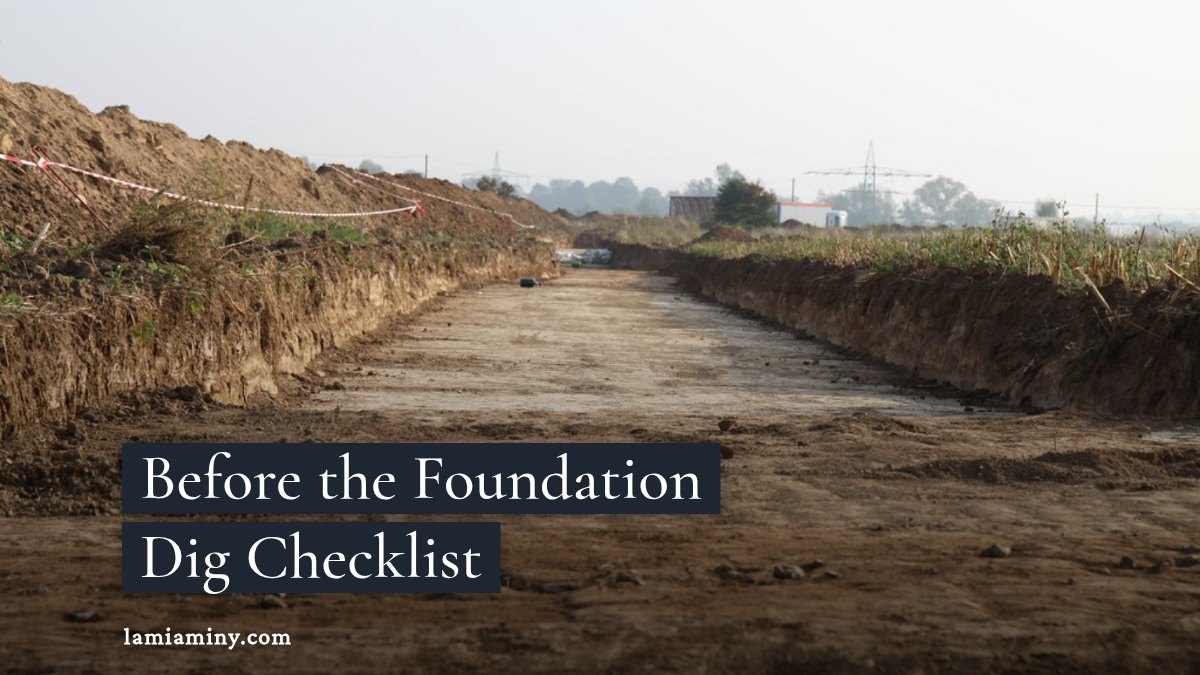
Three things should happen before anyone climbs into an excavator, and an owner can check each one. This is the short list:
- Get the soil report. A geotechnical survey maps soil type, compaction, rock and water table trouble, and Projul calls skipping it a costly mistake. SteelMaster suggests testing before you close on land, because poor soil can make a lot expensive or impractical to build on.
- Call 811 for the locate. According to PHMSA, every state has a one-call center, and the law calls for notice 48 to 72 hours before digging. Dialing 811 costs nothing, and neither does the marking of the lines. Keep the ticket number you are given.
- Put erosion control in first. Projul wants silt fences and a stabilized entrance standing on day one, before the ground is touched.
The rest of the job follows from those three. This piece is a spoke of our Build guide, Who Builds a House From Survey to Final Clean, and it picks up where the surveyor's stakes go in.
Why Call 811 Even for a Small Dig
The locate is the step owners most often assume someone else handled. PHMSA says every digging project needs a call, even planting trees, and that striking a line can mean fines and repair bills. Affected utility companies are expected to come out and mark their facilities with flags or paint. In Michigan, MISS DIG 811 asks for the contractor doing the work, the address, cross streets and the type of work, and says its member utilities mark the approximate location of their lines. MISS DIG itself does not mark. The digger's part, per PHMSA, is to call, wait the required time, respect the marks and dig with care. Projul adds a field rule: hand-dig near anything close to the work area.
Clearing and Stripping Topsoil
Once permits are in hand, the machines arrive. SteelMaster says digging waits for an approved site plan and every permit, and that site prep contractors use bulldozers and excavators to clear and rough-grade after surveying and soil analysis. Before the first tree comes down, Clue says protected areas such as buffer zones, drainage features and trees should be marked. Then comes grubbing, which pulls roots and organic material, because fill cannot be compacted on top of organic material. Topsoil is usually stripped and stockpiled for finish grading and landscaping later, so the pile you see at the edge of the lot is being saved, not discarded.
Rough Grade and the Dig
The topographic survey is the crew's map. It gives contour data used to plan grading, cut-and-fill volumes and drainage, and it flags easements and setbacks. The operator works from that plan to move earth from high spots to low ones, then digs to the depth the foundation needs. Operators coordinate with the crew on the ground using hand or audio signals, according to the Bureau of Labor Statistics. Accuracy matters more than speed here: Projul says a grading plan that is off by one foot of elevation can lead to drainage and foundation problems that cost tens of thousands of dollars. For a pad, SteelMaster says larger buildings should finish within 2 inches of level, and that a 30×40 building needs a pad at least 38×48.
Compaction and Fill
This is the step an owner cannot see once the concrete is down. SteelMaster says "you can never build directly on topsoil or organic-rich ground", so fill work is almost always involved, and that organic material left beneath a foundation lets the building settle unevenly. The geotechnical engineer's recommendations also inform how the foundation is designed, which is why the soil report comes first. Ask who will test the compaction and when, before the fill goes in.
Drainage and Erosion Control
When grading ends, the clock starts. Clue says exposed areas should be stabilized with erosion controls within 14 days of finishing the grade. Controls that keep soil and debris on-site also reduce disruption to neighbors. Projul notes that disturbing more than one acre almost certainly requires a SWPPP and a Clean Water Act permit, which matters mostly on larger lots. Drainage is the reason for the careful grade: the ground should be shaped so water leaves the foundation, not pools against it.
Who Runs the Machines
The Bureau of Labor Statistics describes construction equipment operators as the people who handle the heavy machinery behind roads, bridges, buildings and other structures. The work includes excavation and loading machines, bulldozers, trench excavators and road graders. About 534,100 people held these jobs in 2025, and the median annual wage was $59,600 as of May 2025. Many learn on the job after high school, while others come through apprenticeships or vocational schools. Weather can halt some kinds of construction, BLS notes, yet operators keep working through unpleasant conditions.
How Long Site Prep Takes
Plan for weeks, not days. Clue says residential site preparation may take 1-2 months, and SteelMaster gives 1-2 months for a home including time to obtain permits. SteelMaster also says a survey from a licensed land surveyor typically runs $200 to $2,000, and most jurisdictions require one for a new home.
Picture the lot on the morning the foundation crew arrives. The surveyor's stakes are still standing at the corners. Orange flags and paint from the utility locate have faded along the street edge, and the silt fence holds its line. The topsoil sits in its pile, saved for spring. In the middle is a flat, firm rectangle a little wider than the house it is about to carry.
Highlights
What happens before excavation starts?
Get a soil report, call 811 so utilities can mark their lines, and set up erosion control before soil is disturbed. SteelMaster adds that digging should wait for an approved site plan and all permits.
How long before digging should I call 811?
PHMSA says all states require a call 48 to 72 hours before digging. Michigan's MISS DIG 811 asks for at least 3 business days.
How long does residential site prep take?
Clue says it may take 1-2 months. SteelMaster also gives 1-2 months for a home, including time to obtain permits.
Sources
- Construction Equipment Operators : Occupational Outlook Handbook: : U.S. Bureau of Labor Statistics
- Call Before You Dig! | Stakeholder Communications | PHMSA
- Homeowner Information - MISS DIG 811
- Construction Site Preparation: A Complete Process Guide
- Construction Land Development Guide (2026)
- Site Prep Guide For Construction Of Prefab Buildings