How to Size a Rug and Read the Back
Tape the rug's footprint on your floor, then flip a corner: size sets how the room looks, and the back shows who made it and what it should cost.
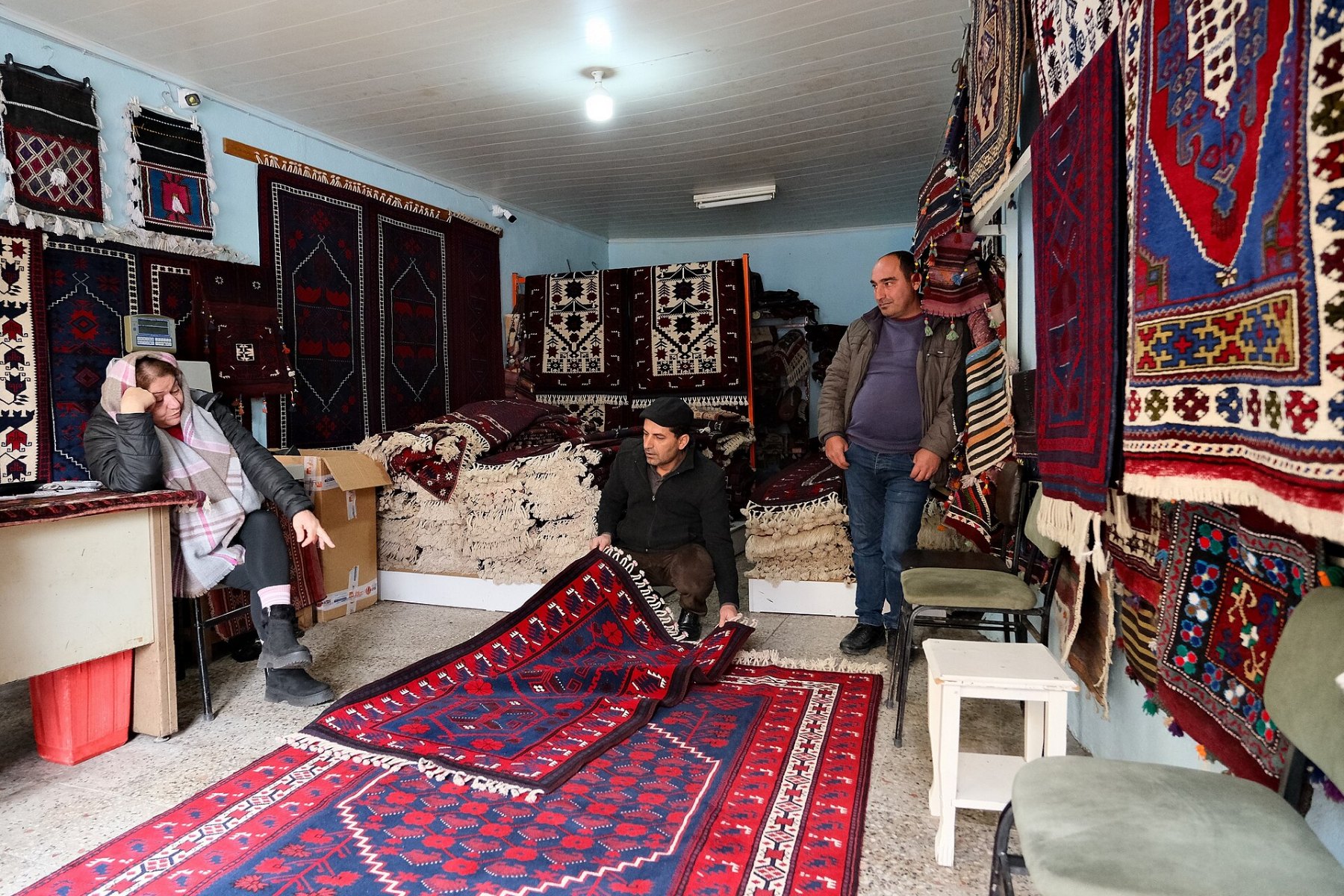
Lay painter's tape on the floor before you pay for a rug. Size decides how a room reads, and construction decides the price and how long the rug holds up, so a rug is worth measuring twice and turning over once. Start with the tape.
- Tape a rectangle on the floor where you picture the rug.
- Keep the tape 8 to 24 inches from each wall.
- Pull the furniture to the tape. If every piece will sit on the rug, plan on 8 to 12 inches of rug past the furniture, which usually means 9' x 12' or larger.
- Match your rectangle to a standard size, then walk around it for a while before you commit.
Those two figures come from the Rugs.com size guide, and the rest of this story sticks to its numbers so the advice does not pull in two directions.
Rug Sizes for Living, Dining and Bedroom
Living room. 8' x 10' is the usual pick, and 9' x 12' suits large rooms and open plans. Interior designer Stacey Dobrovolny told Homes & Gardens that when only the front of the sofa sits on the rug, the range stretches from 8 x 10 feet up to 12 x 15 feet.
Dining room. Measure the table and let the rug reach at least 24 inches past it on every side. That is 8' x 10' for a table of six and 9' x 12' for eight. Designer Sarah Thurston gave Homes & Gardens the same minimum.
Bedroom. 8' x 10' under a queen bed, 9' x 12' under a king, with about 2 feet of rug on each side and at the foot.
Flip It Over Back Test
The back of a rug tells you more than the tag does. Turn a corner up and look.
- A latex coating with a second backing over it means the rug is tufted.
- A back that shows only the weave, with no pile, is a flatweave.
- Yarn tied onto the warp threads means someone knotted it by hand.
- A very low price calls for a question: a computer-controlled loom may have made it, and those rugs can sell for a fraction of handmade prices.
Price follows labor. Months at a loom cost more than an afternoon at a frame.
The Hand Knotter at the Loom
The knotter works at a loom strung with warp, the lengthwise threads that carry the rug's structure. Each knot of yarn is tied onto the warp by hand, and together the knots form the pile. Depending on the rug's size and how tightly it is knotted, one rug can take several months.
Rugs.com reports that top-quality hand-knotted rugs have hundreds of knots per square inch and often cost thousands of dollars. The price is the hours.
The Flat Weaver
A flatweave has no pile. Warp and weft make up the whole rug, so it is durable and easy to clean, and the pattern is the weave itself.
Handloom Jacquard rugs are woven on traditional handlooms, with the pattern formed by interlaced yarns instead of printing. Flatweave is also made by machine, and Wayfair notes that machine-made rugs cost less than handmade ones because they need less labor.
The Tufter With a Gun on a Canvas
The tufter stands at a frame, not a loom. A pre-made cotton canvas is stretched tight, and the tufter pushes yarn through it with a tufting gun, one pass after another. The yarns are not part of the rug's structure, so they are more likely to pull out, and tufted rugs cost far less than hand-knotted ones.
When the last pass is done, the rug is turned over. The back is coated with latex to lock the yarn in place, and a secondary backing is pressed on top, the same layers you can spot from a lifted corner in a showroom.
Highlights
How can I tell if a rug is hand-knotted, flatwoven or tufted?
Flip it over. A tufted rug has a latex coating and a secondary backing, a flatweave has no pile and shows only warp and weft, and a hand-knotted rug has yarn tied onto the warp.
What size rug fits a living room?
8' x 10' is the usual size for most living rooms, and 9' x 12' suits large rooms and open plans. Tape it out first and keep 8 to 24 inches of bare floor to the wall.
How far should a rug extend past a dining table?
At least 24 inches on all sides. Rugs.com suggests 8' x 10' for six people and 9' x 12' for eight.
Sources
- How It’s Made: A Guide to Types of Rugs, Weaves and Materials | Rugs.com
- The Story Behind Handmade Rugs | Ideas | OKA
- How to Choose the Right Rug Size: Your Rug Size Guide | Wayfair
- What Size Rug Do I Need? The Complete Rug Size Guide for Every Room | Rugs.com
- The ultimate rug size guide: the right dimensions for every room | Homes and Gardens