Paperwhite and Orchid Care on a Winter Windowsill
How to force paperwhite bulbs and keep a white moth orchid blooming this winter, plus why a houseplant is no substitute for an air purifier.
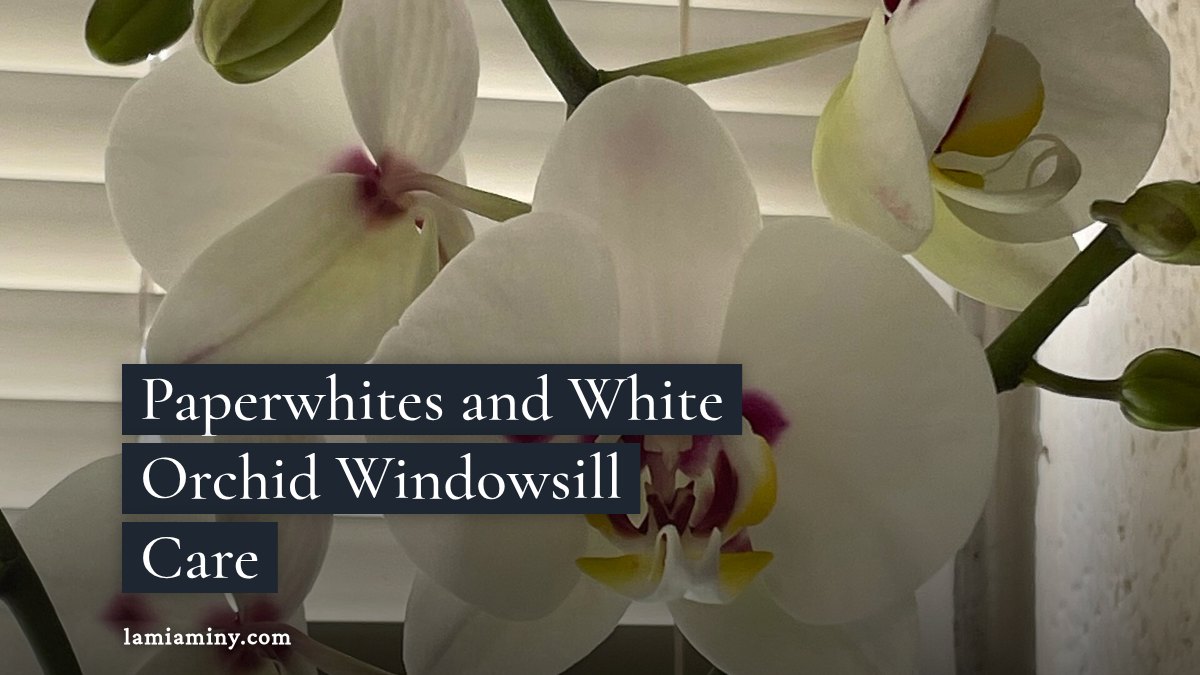
A winter windowsill has one job on paper, which is letting in what light there is. Give it a second job. Studies suggest plants can improve perceived comfort and psychological well-being, and a bowl of paperwhites is the cheapest hire you can make. Home for the Harvest says they need no cold treatment and bloom 3 to 6 weeks after planting. The horticulturists at Iowa State Extension lay out the method this way:
- Use a clear, shallow bowl with no drainage holes, or a pot. Set the bulbs on gravel with the tips exposed.
- Keep the water touching the bottoms of the bulbs the whole time.
- Park the bowl somewhere cool and dark, 45 to 50°F, for 2 to 3 weeks to encourage roots. Home for the Harvest skips this step; Iowa State recommends it.
- When shoots reach 3 inches, move the bowl to a sunny window at 60 to 70°F. Once the flowers open, shift it out of direct sun to prolong the bloom.
- After the flowers fade, discard the bulbs. They can't be forced again and aren't hardy outdoors.
Moth Orchid Care Steps
The white orchid on the next sill over is a moth orchid. The extension horticulturists at Maryland and Iowa State agree on most of its routine:
- Give it indirect light from an east or west window. In the short days of winter it can take direct light or a south window.
- Water it just as the media dries, no more than once a week at normal home temperatures.
- Empty the saucer within 30 minutes, and never let the orchid sit in water.
- Skip fertilizer in the cooler, lower-light winter months.
- Leave aerial roots sprawling outside the pot alone. They're normal and shouldn't be cut.
- When the blooms fade, cutting the stalk above the second node may bring new blooms in 8 to 12 weeks, though that isn't guaranteed.
When to Plant Paperwhites
For a Christmas display, Home for the Harvest advises planting paperwhites in mid to late November, which is right now. Start a new batch every 10 days and the flowers keep coming all winter.
The same page passes along a tip from Illinois Extension: 50 to 60°F for the first week or two after planting, then temperatures in the 60s°F, to prevent lanky growth.
Keeping Paperwhite Stems Short
Paperwhites that flop over are a familiar complaint. Cornell researchers, as Home for the Harvest reports, found that watering with a weak alcohol solution makes the plants a third to a half shorter, with equally large, fragrant, long-lasting flowers. The solution should be 4% to 6% alcohol, applied once shoots are 1 to 2 inches tall. Beer and wine are not the right choice.
Paperwhites and Pet Safety
Narcissus, paperwhites included, is on the ASPCA's list of plants that are toxic to dogs, cats and horses, and the bulbs are the most dangerous part, according to Home for the Harvest. In a house with pets, set the bowl where they can't get to it.
Moth Orchid Light and Humidity
Low light is the most common reason an orchid doesn't reflower, says Maryland Extension. Iowa State offers a leaf test: dark green leaves and no flowers mean too little light, while a medium grassy green means enough. If your window falls short, add a full-spectrum fluorescent or LED light 6 to 12 inches above the leaves, on for at least 14 hours a day.
Clemson recommends a minimum night temperature of 65°F for moth orchids, with daytime 10 to 15 degrees warmer. It adds that most orchids want 40 to 60 percent humidity, which most homes lack. Misting isn't the fix, according to Maryland and Iowa State. And never plant an orchid in soil: Clemson says that commonly kills them, since most are epiphytes that need very well-aerated, draining media.
Houseplant Air Purifier Myth
The most repeated claim in the nature-indoors genre is that houseplants purify your air. The idea traces to a 1989 US study for NASA, run in sealed chambers where some plants reduced volatile organic compounds. A real home isn't a sealed chamber. A 2019 modeling study found it would take 10 to 1,000 plants per square meter to match a building's passive ventilation. The article's author sums it up this way: plants pull out some pollutants, but they can't be your only line of defense against bad indoor air.
Public health advice runs in a different order: remove pollution sources first, then improve ventilation and use filtration. True HEPA filters capture at least 99.97% of very small particles. Plants can even add trouble, because overwatered or neglected "pots can contribute to moisture problems or microbial growth indoors", which is one more reason to empty the orchid's saucer.
A Windowsill in December
So the sill earns its place another way. By the end of November the paperwhites are in gravel, the orchid's saucer is empty, and in ten days a second bowl goes in beside them. Then the light comes through the glass at four in the afternoon, and the first white flowers are open.
Highlights
Do houseplants clean indoor air?
Not well enough to count on. The 1989 NASA study used sealed chambers, and a 2019 modeling study found 10 to 1,000 plants per square meter would be needed to match passive ventilation.
When should I plant paperwhites for Christmas?
Home for the Harvest advises planting in mid to late November, with a new batch every 10 days for winter-long flowers. Blooms come 3 to 6 weeks after planting.
How often should I water a moth orchid?
No more than once a week at normal home temperatures, just as the media dries. Empty the saucer within 30 minutes.
Are paperwhites safe around pets?
No. The ASPCA counts narcissus, paperwhites included, as poisonous to dogs, cats and horses, and the bulbs carry the most risk.
Sources
- How do you force paperwhite narcissus? | Yard and Garden
- Forcing paperwhites: how to grow them indoors in water or soil – Home for the Harvest
- Care of Phalaenopsis Orchids (Moth Orchids) | University of Maryland Extension
- Orchids | Home & Garden Information Center
- Growing Orchids Indoors | Yard and Garden
- A NASA Study About Houseplants Has Been Widely Misread, Scientist Says : ScienceAlert