Home Air Quality and Water Testing
Start with the step that costs least, then see what an HVAC technician, a radon specialist and a state-certified water lab each check in your house.
Find what is putting pollutants into your air, and remove it, before you buy a filter, a purifier or a test kit. EPA says cutting individual sources is usually the most effective way to clean up indoor air. It is also often cheaper than adding ventilation, which can push up your energy bill. So the cheapest step is also the one that works hardest.
For the air, the order EPA's three strategies suggest is:
- Source control. Remove or reduce what is polluting the room.
- Ventilation. Run the bathroom and kitchen fans that vent outdoors.
- Filtration. Change the filter in your furnace or air conditioner on schedule.
Water is a separate job with a different pro, a state-certified drinking water laboratory, and it gets its own section below.
Source Control for Indoor Air
EPA says some air fixes cost little or nothing, among them controlling sources and adjusting humidity. Three jobs fit here. Keep humidity between 30 and 50 percent, checked with a gauge from most hardware stores. Dry water-damaged areas and items within 24 to 48 hours so mold does not take hold. And have fuel-burning appliances inspected regularly for leaks and repaired when needed, with a carbon monoxide alarm worth considering.
Bathroom Fan and HVAC Ventilation
Most home heating and cooling systems, forced air included, do not pull fresh air in from outside, according to EPA. What does move air out is a bathroom or kitchen fan that exhausts outdoors. It carries contaminants out of the room and raises the home's outdoor ventilation rate.
This is the HVAC technician's trade. The American Lung Association says complex systems in larger buildings are best interpreted by certified HVAC professionals, which makes a technician the person to ask what your own system moves and what it does not.
Furnace Filter Changes
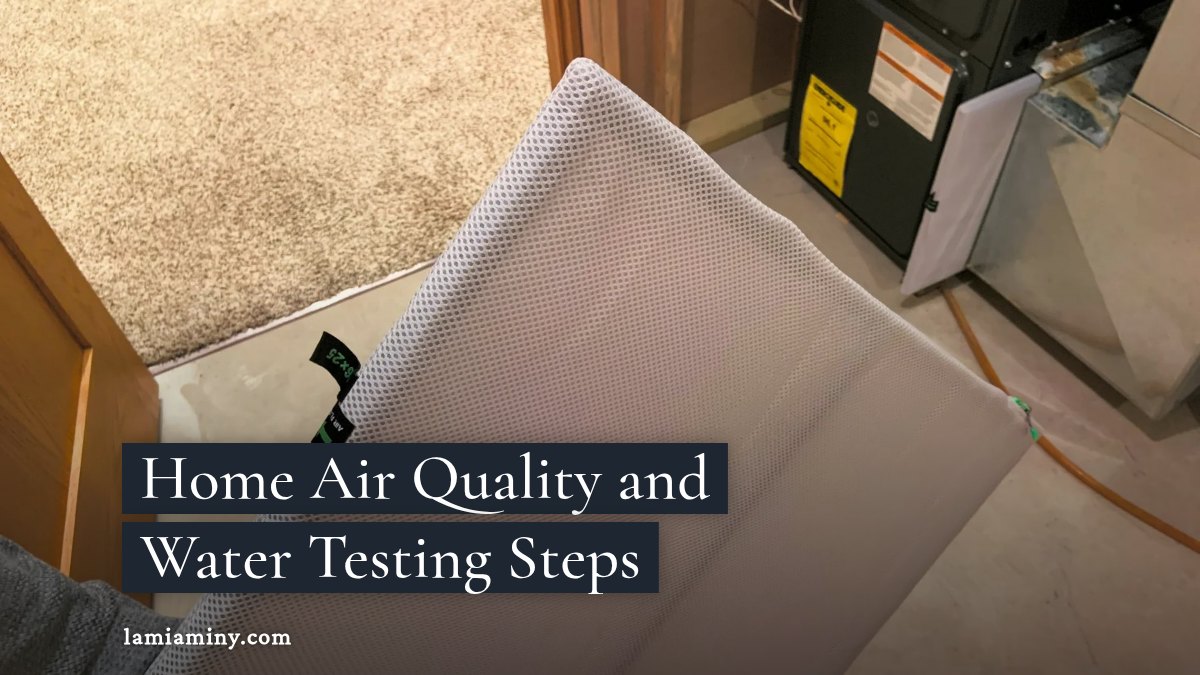
The American Lung Association puts source control first, then ventilation, with air cleaning as a help rather than a replacement for either. Its filter advice is plain: a furnace filter rated MERV 13 or higher catches more small particles, and any HVAC filter should be changed about every two months or sooner if it is dirty. Filters in the system only work while its fan is running.
For one room, the association says portable cleaners with HEPA filters work best. EPA warns that air cleaners are generally not built to remove gases, and that most table-top models remove particles far less well.
Radon Test Kits
You cannot see or smell radon, yet EPA ranks it as the leading cause of lung cancer among nonsmokers and the second leading cause overall. Its advice is to test with a do-it-yourself radon kit and call a qualified radon mitigation specialist only if the result says a fix is needed. The kit is the low-cost step; the specialist does the repair. EPA does not recommend air cleaners for radon, since how well they work is uncertain.
Well Water Testing
EPA cannot test home drinking water on request. It points people to a state-certified drinking water laboratory and publishes a PDF linking each state's certification program so you can find one. Well owners can go through their state program or pay a certified lab directly.
EPA's advice for a private well is a yearly test for coliform bacteria, nitrates, dissolved solids and pH, plus an immediate one after flooding, nearby construction, well repairs, or a change in odor, color or taste. Homes with lead in plumbing or service lines should test for pH, lead and copper. Your local health department may test a well for free.
If a result tops a health standard, call the public health department and re-test; high bacteria can sometimes be treated with chlorine or UV light. A certified well driller handles new, changed or closed wells, and after a flood a well or pump contractor should disinfect before the pump goes back on.
Who Tests What
- You: source control, a humidity gauge, filter changes, a do-it-yourself radon kit.
- HVAC technician: what your system moves and brings in.
- Qualified radon mitigation specialist: the fix, if your result calls for one.
- State-certified drinking water lab: tap and private well samples.
- Health department: possible free well testing, and the call after a result over a health standard.
- Certified well driller or well and pump contractor: new, changed or flooded wells.
Check Your Filter Today
The first inspection needs no pro. The American Lung Association says a dirty filter shows itself when you hold it against a sheet of white paper. Slide it out, hold it up to the light, and you will know whether it is time.
Highlights
What is the cheapest step to improve indoor air?
Source control. EPA says it is usually the most effective approach and often more cost-efficient than adding ventilation.
Who tests my drinking water?
A state-certified drinking water laboratory. EPA cannot test home water on request, and a local health department may offer private well testing for free.
How often should I change my furnace filter?
The American Lung Association says about every two months or when dirty, which you can see by comparing it to white paper.