Finish Carpentry After Framing
How a framed shell becomes trim, stair railings and doors, what framing and finish carpenters each do, and what to confirm before trim goes up.
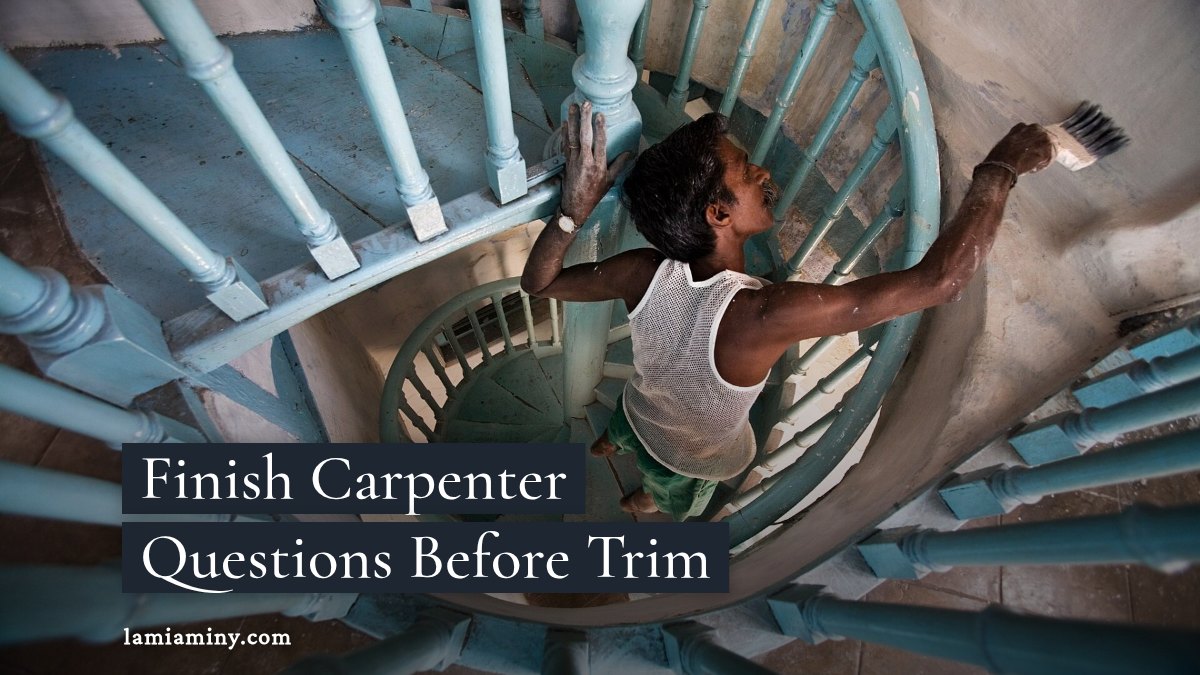
Ask one thing before anyone nails a baseboard: is the house ready for it? Finish carpentry starts once the house is framed, dried in, and the plumbing, wiring, drywall and insulation are in place, according to the carpentry supplier M.T. Copeland. Trim hung too early gets cut around other trades' work.
The framer builds the part of the house you will never see, on purpose. The finish carpenter builds the part your hand finds every morning, and the rest of the crew works in the gap between.
What Framing Carpenters Do
Framing, or rough, carpenters build the structure and install exterior doors and windows, according to M.T. Copeland. Skilled Trades College says they usually come in first to set up walls, roofs (trusses and rafters) and floors (subfloors and joists), reading blueprints so the frame matches the design and building codes. The work is often crew-based, with saws and nail guns. BLS also counts concrete forms, scaffolds and temporary frame shelters as rough carpentry.
What Finish Carpenters Do
Finish carpenters handle the interior wood. M.T. Copeland lists baseboards, stair railings, crown molding, door and window casing, cabinetry and built-in furniture. Skilled Trades College adds shelving and flooring. They also hang interior doors and check that each one is aligned and opens and closes properly.
The work is often more solo than framing, and the tools get finer: chisels and mitre saws, plus tape measures, speed squares, levels, marking knives and scribing tools. Most builds rely on specialists, Skilled Trades College says, though some carpenters work across stages, and M.T. Copeland says some finish carpenters start on framing crews and gradually learn the final details.
Carpenter Apprenticeships
BLS lists self-employed workers as 25% of carpenters in 2025, the largest employer group. Odds are good that whoever builds your stairs works for themselves, so the hiring questions are yours to ask directly. BLS says carpenters typically learn on the job or through apprenticeships, starting with simple measuring and cutting under experienced carpenters. Unions and contractor associations sponsor those programs, and requirements differ by type and region.
What to Confirm Before Trim Goes Up
M.T. Copeland says not every carpenter is qualified for finish work, which takes precise craftsmanship and an eye for interior design. Before trim goes up, confirm these:
- The house is framed and dried in, and the plumbing, wiring, drywall and insulation are done.
- The carpenter does finish work as a specialty, not only framing.
- They will check that each interior door is aligned and opens and closes properly.
- They talk to the other trades, subcontractors and suppliers. M.T. Copeland calls communication skills key.
Highlights
What is the difference between a framing carpenter and a finish carpenter?
Framing (rough) carpenters build the structure: walls, roofs and floors. Finish carpenters handle interior wood details such as trim, stair railings, doors and cabinetry.
When does finish carpentry start?
After the house is framed and dried in, and the plumbing, wiring, drywall and insulation are in place.
What should I ask before hiring a finish carpenter?
Ask whether finish work is their specialty, since not every carpenter is qualified for it. Also ask how they check door alignment and whether they coordinate with the other trades.