Women in the Building Trades and Where to Start
Women hold 11.3% of construction jobs but 4.3% of trade jobs. Here are the three doors in, and what the field is like once you walk through.
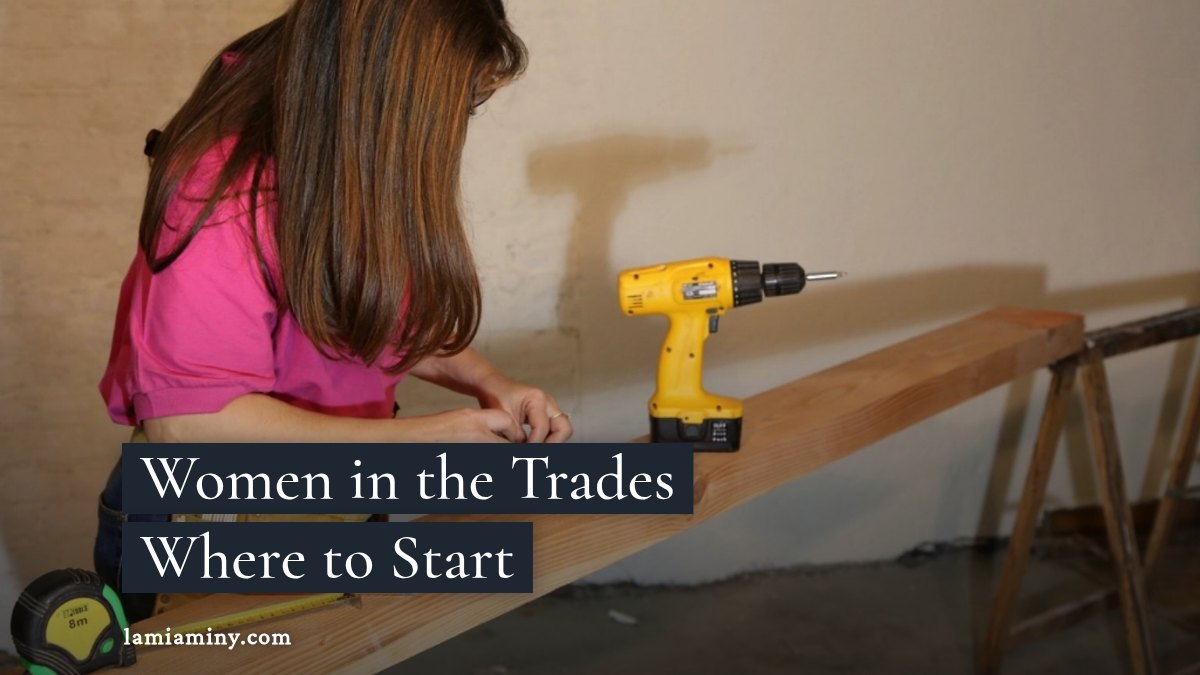
If you are an apprentice-to-be, a firm owner short a crew, or a homeowner wondering who will show up to wire the kitchen, one number matters: 4.3%. That was women's share of tradesworkers' jobs in 2025, about 364,000 women working as electricians, carpenters and the like, according to IWPR. Women are 11.3% of all construction jobs. Construction's headcount and the trades' headcount are two different crowds, and most of the women in the first one are not holding tools. For a crew, that gap is a hiring pool nobody is fishing. For a woman, it is a map of where the doors are.
Three Ways Into the Building Trades
The sources point to three doors. Take them in this order if you are starting from zero:
- Start with a pre-apprenticeship. It is a short course that teaches the basics before an apprenticeship begins. The Chicago Carpenters Training Center ran its first all-female pre-apprenticeship class, which graduated on May 13, 2022. In nine weeks, the women learned to set concrete forms, do residential wood framing and erect scaffolding. To find one near you, start with the WANTO grant page from the US Department of Labor's Women's Bureau. IWPR says these programs remain crucial for women entering fields where they are a minority, and points to the 2025 WANTO round as recognition of that.
- Apply to a union apprenticeship. This is paid learning on the job. IWPR described union construction trades jobs in March 2021 as offering high wages, the chance to earn while learning, healthcare and the chance to own a home. The federal apprentices by state dashboard shows how many apprentices are active in your state.
- Find a trade organization. Chicago Women in Trades helped organize that carpenters' class, which is the kind of tie to look for: a group of tradeswomen who already know which programs are open.
What to Ask a Contractor or Union Local
The women interviewed in the field are specific about what makes a job workable. Early-career Black, Latina and Afro-Latina tradeswomen described pride in their work, along with distant toilets, isolation and harassment, in IWPR's report. Interviewees in a piece reported by NRCA suggested flexible policies and properly sized PPE and facilities. So before you sign on, ask:
- Is PPE available in my size?
- Where are the toilets on a job site, and how far?
- Are there other women on the crew, and who can I go to with a problem?
- Is scheduling flexible?
Those same interviewees named early exposure and visible role models as what attracts and keeps women. In that Construction Executive survey, 10 of 12 women reported discrimination, so the questions are not a formality.
Women in Each Trade by the Numbers
The share varies by trade. IWPR estimated women at 11.1% of painters and paper hangers in 2025, and 4.7% of construction laborers, the largest single trade occupation. Overall, the 11.3% is up from 11.2% in 2024, and the number of women in construction grew by more than 45% between 2015 and 2024 (IWPR).
What Starting Out Is Like
I could not find a tradeswoman's own words in the sources for this edition, so the voices here are the ones on the record. Victoria Torres, a senior project manager at Leopardo, told women in March 2026 that construction offers limitless growth to people who like staying active, building relationships and learning continuously. Her colleague Kamylle Ramos, a project manager, urged women not to be intimidated, to ask questions and to speak up, as Real Estate Journals reported. Both work on the management side of the site, which is where most women in construction sit today.
Apprenticeship Is Changing
The pipeline is under strain. Women were 5.0% of active construction apprentices in fiscal year 2025, unchanged from the year before. New construction apprentices, women and men alike, fell to a little over a fifth of the previous year's number, per IWPR. The same report notes that in January 2025 Executive Order 14173 rescinded the long-standing federal goal of 6.9% of hours worked by women on federally funded construction projects.
Women Operating Engineers at Build Nations
The Tradeswomen Build Nations Conference in Chicago is where tradeswomen gather. In a Construction Equipment report, women operating engineers in the room numbered 264. At the same meeting in 2016, there were 14.
Highlights
How many women work in construction?
IWPR estimated 1,369,673 women worked in construction in 2025, or 11.3% of industry jobs. In specific trades such as electricians and carpenters, women were 4.3% of workers.
Where do women start in the building trades?
Common doors are pre-apprenticeship programs, like the nine-week carpenters class in Chicago, paid union apprenticeships, and trade organizations such as Chicago Women in Trades.
What share of construction apprentices are women?
Women were 5.0% of active construction apprentices in fiscal year 2025, unchanged from the year before.
Sources
- Thankful for Small Graces: Women’s Construction Jobs Mostly Held Steady in 2025 - Institute for Women’s Policy Research
- Report shows 45% increase of women in construction during the past decade | 2026-04-23 - National Roofing Contractors Association
- Construction Still Lags Behind in Hiring Women | Construction Equipment
- Chicago Carpenters Training Center Welcomes All-Female Class – Mid-America Carpenters Regional Council
- New Report Lifts Up Black, Latina, and Afro-Latina Women’s Voices in Construction Trades - Institute for Women’s Policy Research
- Women in Construction Week 2026: Making gains, celebrating success – REJournals