Michelle Riverón and the Case for Flowers Without Foam
Floral foam breaks down into microplastics. A Miami designer shows how big, dramatic arrangements can do without it.
For decades, the green brick hidden inside an arrangement did a lot of quiet work. Floral foam holds water and holds stems at exact angles, which is why so many centerpieces look the way they do. It is also a plastic.
In 2019, researchers at RMIT University in Melbourne reported that floral foam breaks down into microplastics that harm aquatic life. In lab tests, freshwater and marine animals swallowed the foam particles, and chemicals leaching from them were toxic to the animals. The same team surveyed more than 1,200 florists: two-thirds used foam, and 72% of those poured the foam-filled water down the sink or drain.
A studio that skips it
Michelle Riverón, a floral designer in Miami, Florida, built her studio without it. Riverón designs events, installations and editorial flowers that are foam-free and compost-friendly, so what is left after the party can go back to the earth instead of the trash.
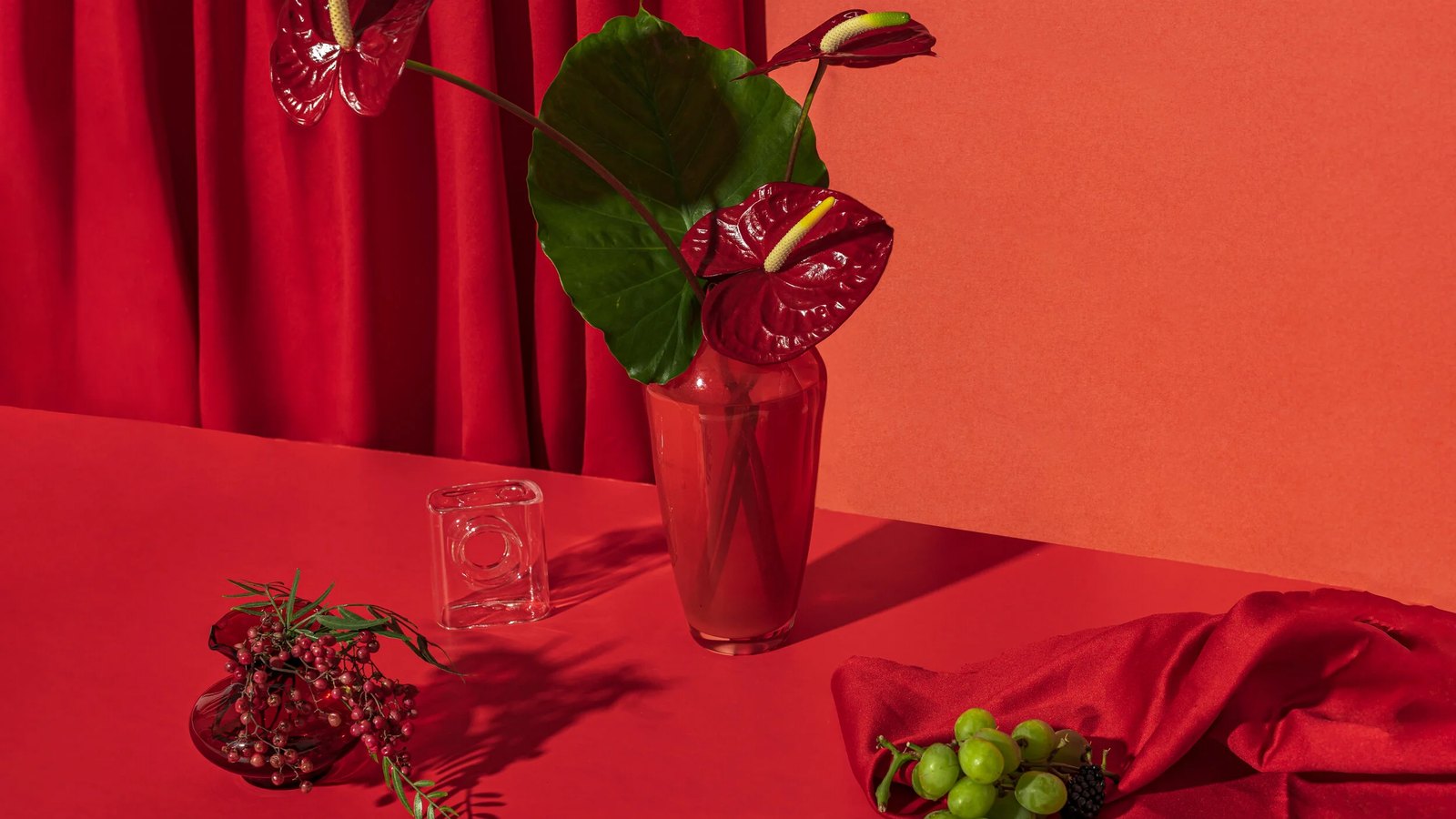
Going without foam has not made her work smaller. Her Instagram tagline is raw nature, refined drama, and the arrangements live up to it: stems that arc out of the vase, amaranthus that spills over the edge, flowers set loose against saturated color in her still-life series.
How the big pieces stand up
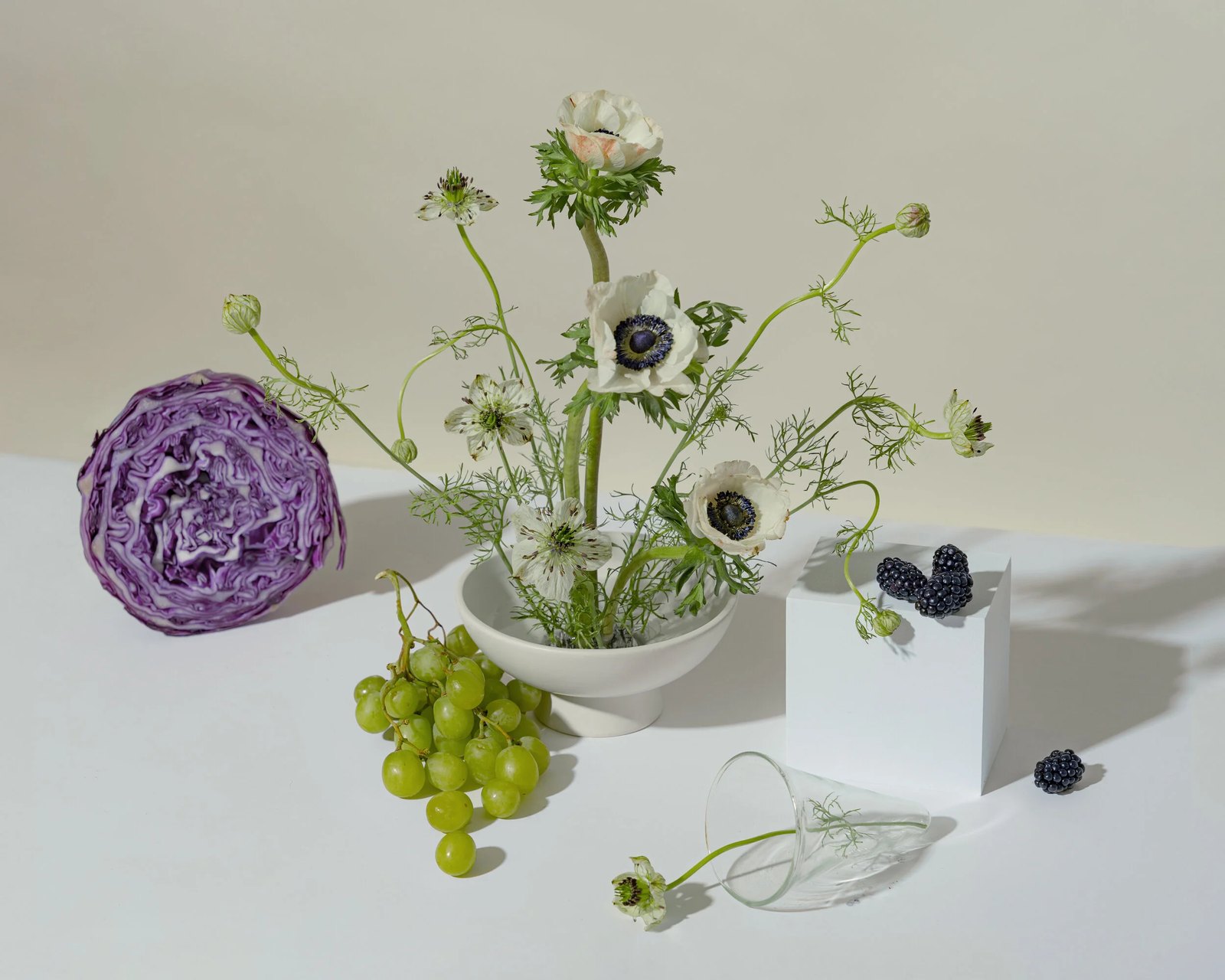
Riverón's own work shows how. Without a foam block, the vessel and the stems do the holding, with water in the vase rather than in a sponge. Her tables for an Alexander McQueen dinner were exactly that, single stems in clear glass, and her Art Basel 2024 sculpture for Aperol Spritz built its shape from oranges, with gerberas tucked in.
Bringing it home
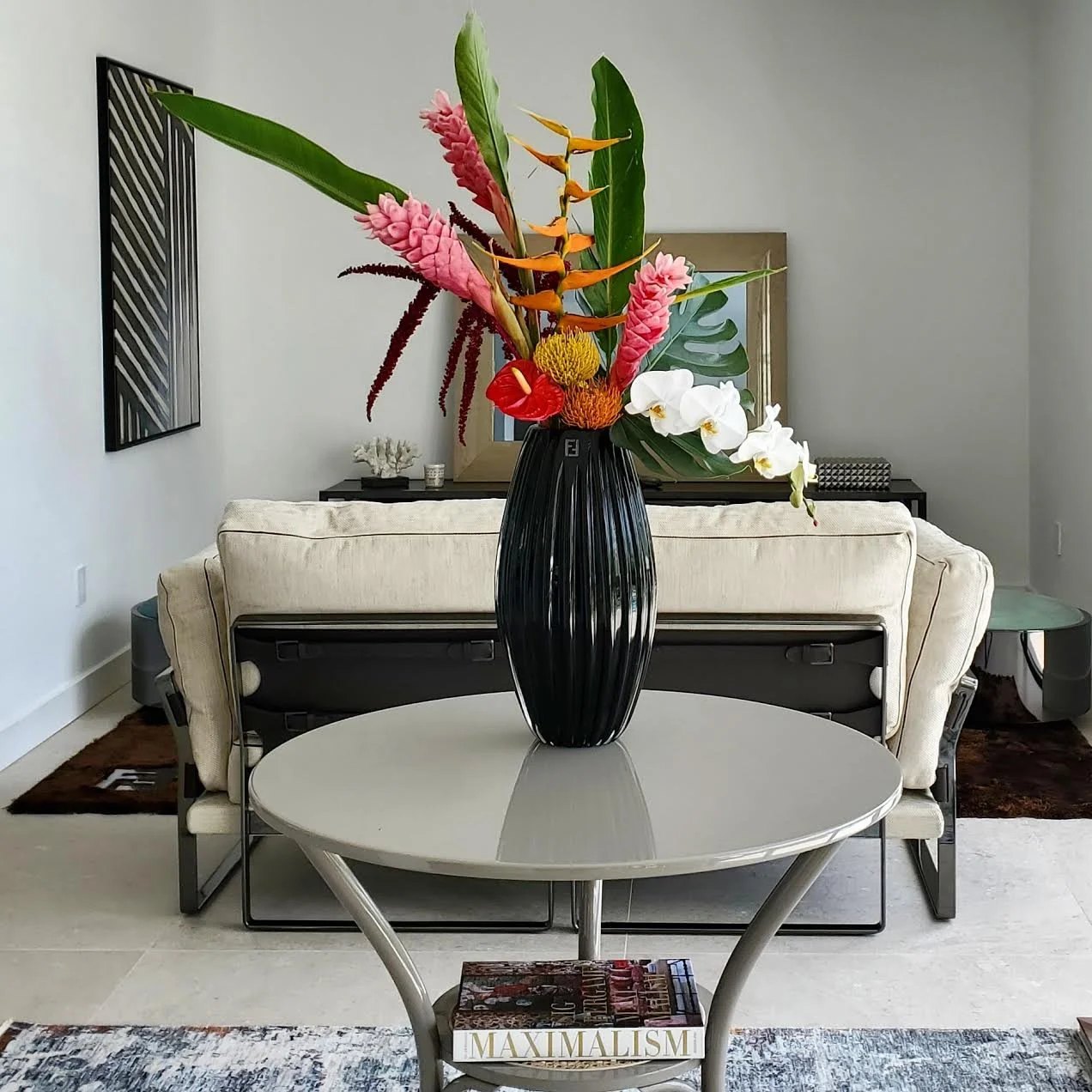
The same thinking works in a living room. Riverón stages homes and sends out custom arrangements with next-day delivery, and a single tall vessel with a few dramatic stems does more than a dense dome of flowers. For Casa Fendi, she set heliconia, ginger and orchids in one black ribbed vase on a round table.
When the flowers fade, a foam-free arrangement can go straight into the compost, vase water and all. That is the whole point.
Highlights
Why are florists moving away from floral foam?
Floral foam is a plastic that breaks down into microplastics, and a 2019 RMIT University study found the particles and their chemicals harmed aquatic animals.
Who is Michelle Riverón?
Michelle Riverón is a floral designer in Miami, Florida, and the name behind Riverón, a foam-free studio for events, installations and editorial floral design.
How many florists use floral foam?
In a survey by the RMIT researchers, two-thirds of more than 1,200 florists used foam, and 72% of those poured the wastewater down the drain.